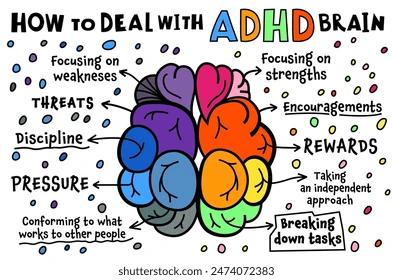
{title}
# Understanding ADHD: A Comprehensive Guide
ADHD (Attention-Deficit/Hyperactivity Disorder) is a neurodevelopmental condition that affects millions of people worldwide. Understanding its causes, symptoms, and impacts is essential for proper management.
## What is ADHD?
ADHD is a complex neurological condition characterized by persistent patterns of inattention, hyperactivity, and impulsivity that interfere with functioning or development. While often diagnosed in childhood, ADHD frequently persists into adulthood, affecting various aspects of life, from academic and professional performance to personal relationships.
> Did you know? Approximately 4-5% of adults worldwide have ADHD, though many remain undiagnosed or misdiagnosed.
## Brain Differences
Research using neuroimaging techniques has identified several structural and functional differences in the brains of individuals with ADHD:
- Reduced volume in specific brain regions, including the prefrontal cortex
- Differences in neural pathways related to attention and executive function
- Altered patterns of brain activity during tasks requiring sustained attention
- Different neurotransmitter levels, particularly dopamine and norepinephrine
## Common Symptoms
ADHD symptoms typically fall into two main categories: inattention and hyperactivity-impulsivity. Most individuals with ADHD display a combination of both types, though some may predominantly exhibit one category of symptoms.
### Inattention Symptoms
- Difficulty sustaining attention in tasks or play
- Frequently making careless mistakes
- Struggling to follow through on instructions or finish tasks
- Poor organization and time management
- Forgetfulness in daily activities
### Hyperactivity-Impulsivity Symptoms
- Fidgeting or inability to sit still
- Excessive talking and interrupting others
- Difficulty waiting for turns
- Feeling restless or "driven by a motor"
- Acting without thinking about consequences
## How ADHD Affects Daily Life
The impact of ADHD extends beyond simple inattention or hyperactivity. It affects work, education, and relationships.
Despite these challenges, many adults with ADHD develop effective coping strategies and thrive in environments that allow their unique strengths to shine. Creative thinking, hyperfocus on interesting tasks, and out-of-the-box problem-solving are common positive traits associated with ADHD.
## Conclusion
Understanding ADHD as a difference in brain function rather than a deficit helps build a foundation for effective management strategies. By recognizing both the challenges and the strengths associated with ADHD, individuals can develop personalized approaches to thriving with this condition.
If you relate to the symptoms described in this article, consider exploring the assessment tools available on ADHD Explorer and consulting with a healthcare professional for proper evaluation and guidance.